
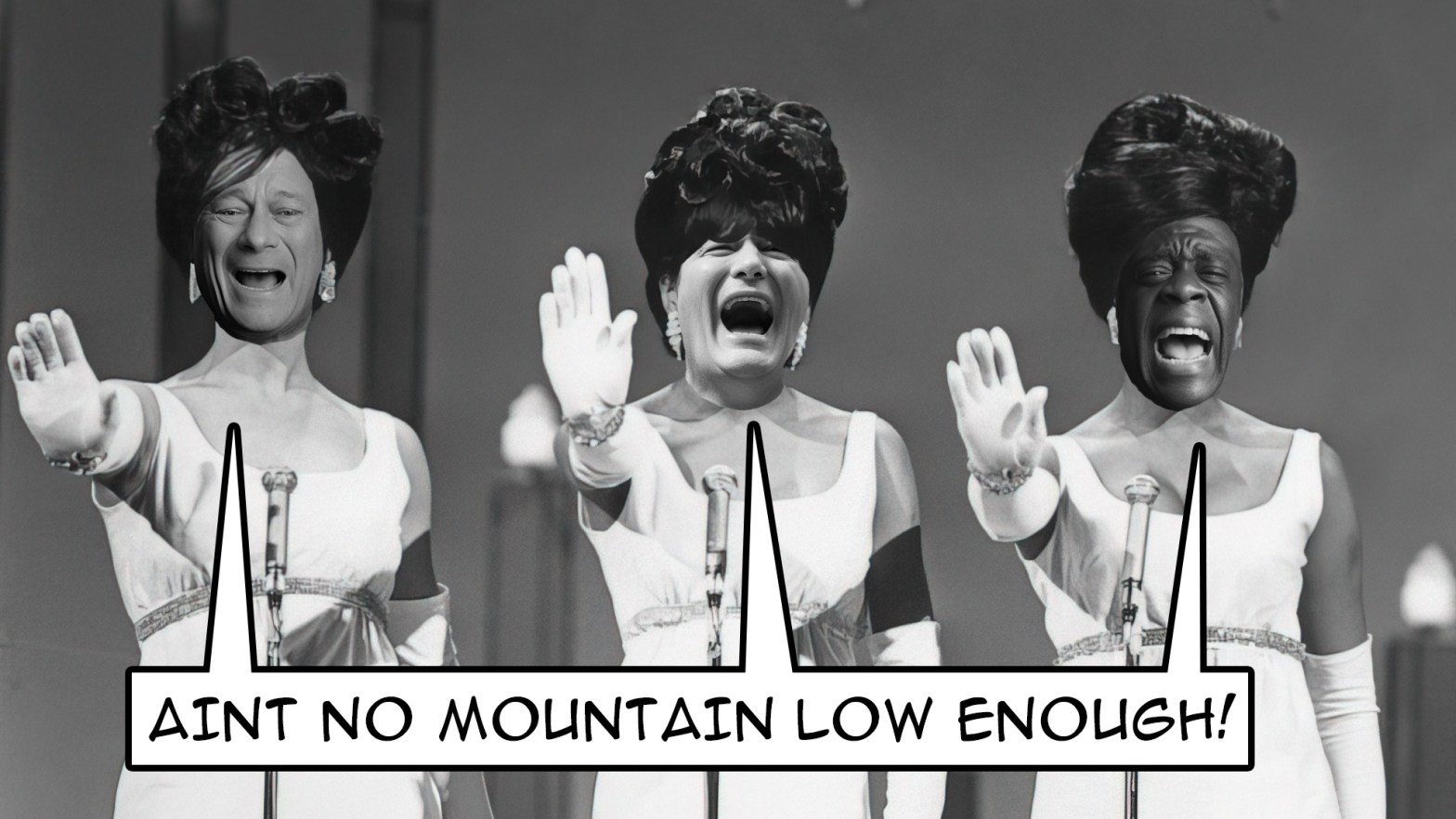
None of the tunes The Supremes have recently belted out come as a surprise. Affirmative action at colleges: puff, gone. Overriding the law that ensures that all people are entitled to seek the services of public business, puff, gone. After all, why should anyone have to design a website for LGBTQ heathens? By siding with the plaintiff the court has created a religious opt-out from compliance with laws that govern the commercial marketplace. This is a dark slippery slope. Who’s next? Why not ban Jews and Muslims because they are non-believers? Blacks because they are not White Christian Americans? Justice Ketanji Brown Jackson’s question to the lawyers of the “Smith” case: says it all when describing children being photographed in a mall with Santa Claus: “is that only white children can be photographed with Santa in this way, because that’s how they view the scenes with Santa that they’re trying to depict.”

In the Affirmative Action decision chief justice Roberts had his wet dream come true. In 2007, he wrote in a case striking down race-conscious state programs aimed at integrating schools:
“The way to stop discrimination on the basis of race is to stop discriminating on the basis of race.” In the current case, he returned to his 2007 argument: “eliminating racial discrimination means eliminating all of it”.
Let’s deconstruct that for a moment. In Robert’s view, there is no real difference between the centuries of racial discrimination against Black people and targeted race-conscious efforts to help Black people. Both are equally bad in this view. Robert’s is saying just stop it: just stop discriminating against people because of their race; all this other nonsense is irrelevant. Come on people, get it together. Just be colorblind, damn it. Law enforcement, just refrain from targeting black men. Security cameras in stores, please take your eyes off black customers. Let’s just get over the ridiculous wealth disparity in this country between blacks and whites. I can go on, and on and on.

For context here’s what Lyndon Johnson said in a 1965 commencement speech at Howard University (a well known HBCU), “You do not take a person who, for years, has been hobbled by chains and liberate him, bring him up to the starting line of a race and then say, ‘You are free to compete with all the others,’ and still justly believe that you have been completely fair.”
Here’s what Justice Sonia Sotomayor wrote in dissent. The decision cements “a superficial rule of colorblindness as a constitutional principle in an endemically segregated society where race has always mattered and continues to matter.”
Here’s Ketanji Jackson: “Our country has never been colorblind. Deeming race irrelevant in law does not make it so in life.”
With so much to lament in these decisions, I want to bring your attention to a case the Supremes chose not to hear. (It takes 4 justices to allow a case to be brought before them.), that received little mention that was startling.
The case challenged Mississippi rules around voting rights for people with felony convictions, leaving intact a policy implemented more than a century ago with the explicit goal of preventing Black people from voting.
In the state’s 1890 constitutional convention, delegates chose 23 crimes that they believed Black people were more likely to commit, and used the commission of those crimes to disenfranchise them from the right to vote. This was part of the Jim Crow strategy that was instituted in the south in response to blacks growing success after emancipation. Mississippi was actually the first state to elect a black senator. Not used to sharing power, the White cavalry came to the rescue.* (The rise of the KKK began around this time as well!) The president of the convention of the time was very clear about their intention: “We came here to exclude the negro. Nothing short of this will answer.” (The crimes, which include bribery, theft, carjacking, bigamy, and timber larceny, have remained largely the same since then. Mississippi voters amended it to remove burglary in 1950.)
So can we please get an explanation from the Supremes for why they refused to hear a case that specifically addressed egregious practices that still continues to disenfranchise blacks from voting, and was created to “exclude the negro”?
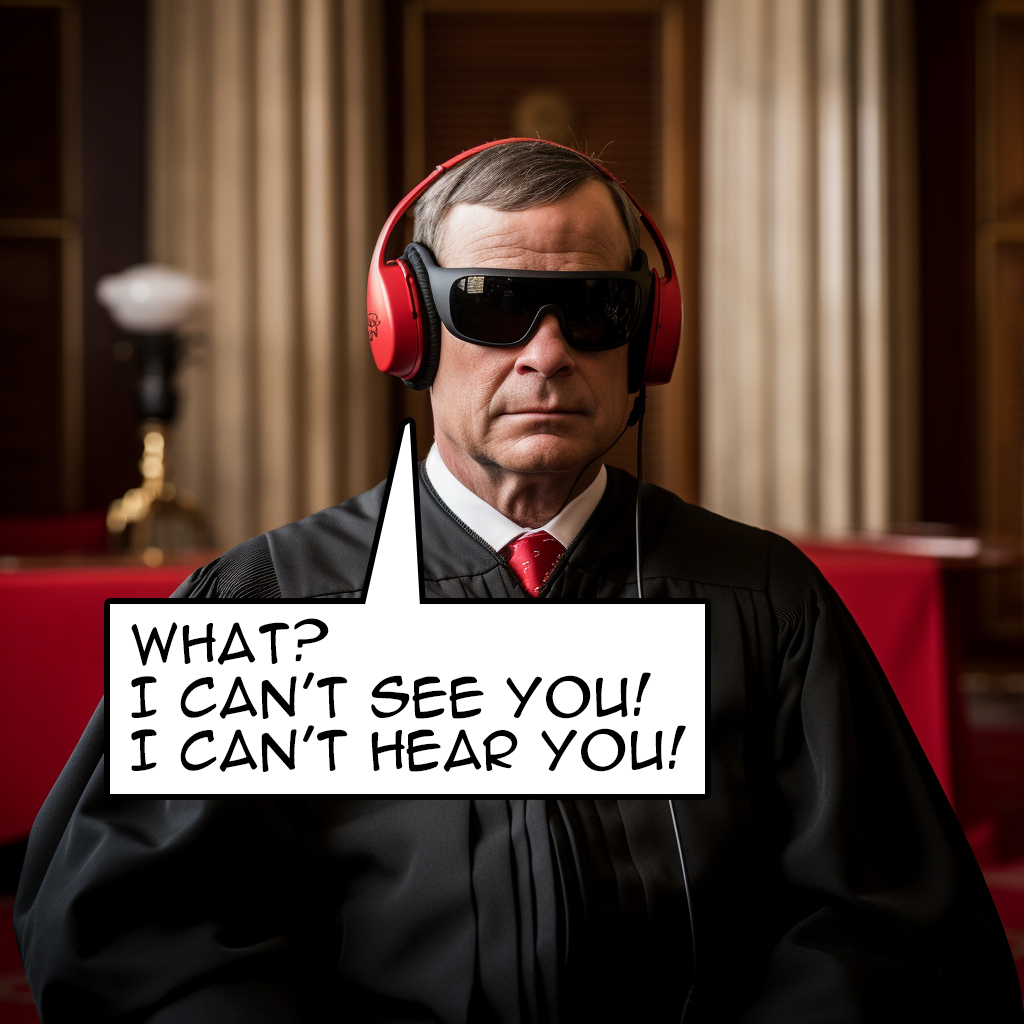
Mr Roberts, I can’t hear you. Mr. Roberts, your fantasy of colorblindness is a delusion; but you’re blindness (to reality) and tone-deafness are destructive. You are supremely awful!
*When abolitionists petitioned Congress to emancipate slaves, Senator John C. Calhoun objected, warning that “the next step would be to raise the Negroes to a social and political equality with whites; and that being effected, we would soon find the present condition of the two races reversed.” Black Americans would be masters and white people slaves.
 The Grand Offal Party